

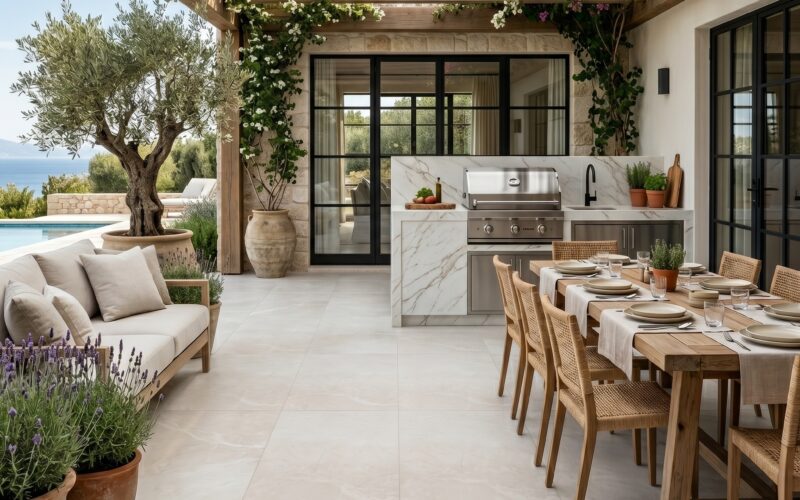
Outdoor Kitchen Flooring: Pros, Cons, and Best Finishes
Table of Contents
It’s springtime, and we’re constantly talking about the BBQ parties with our clients. You can host a dinner party, or you may just enjoy spending time at your outdoor kitchen with the kids. The flooring material is too important, as I’ve experienced from our residential outdoor flooring projects. We’ve pulled up enough cracked, oil stained patios to tell you exactly why most outdoor kitchen flooring fails, and it’s almost never the grill. It’s the floor, that’s why we discuss it. Homeowners spend months picking cabinet colors and BTU ratings, then grab whatever tile is on clearance. By year two, they’re calling us to rip it out. Let me save you from being a subreddit with a help title.
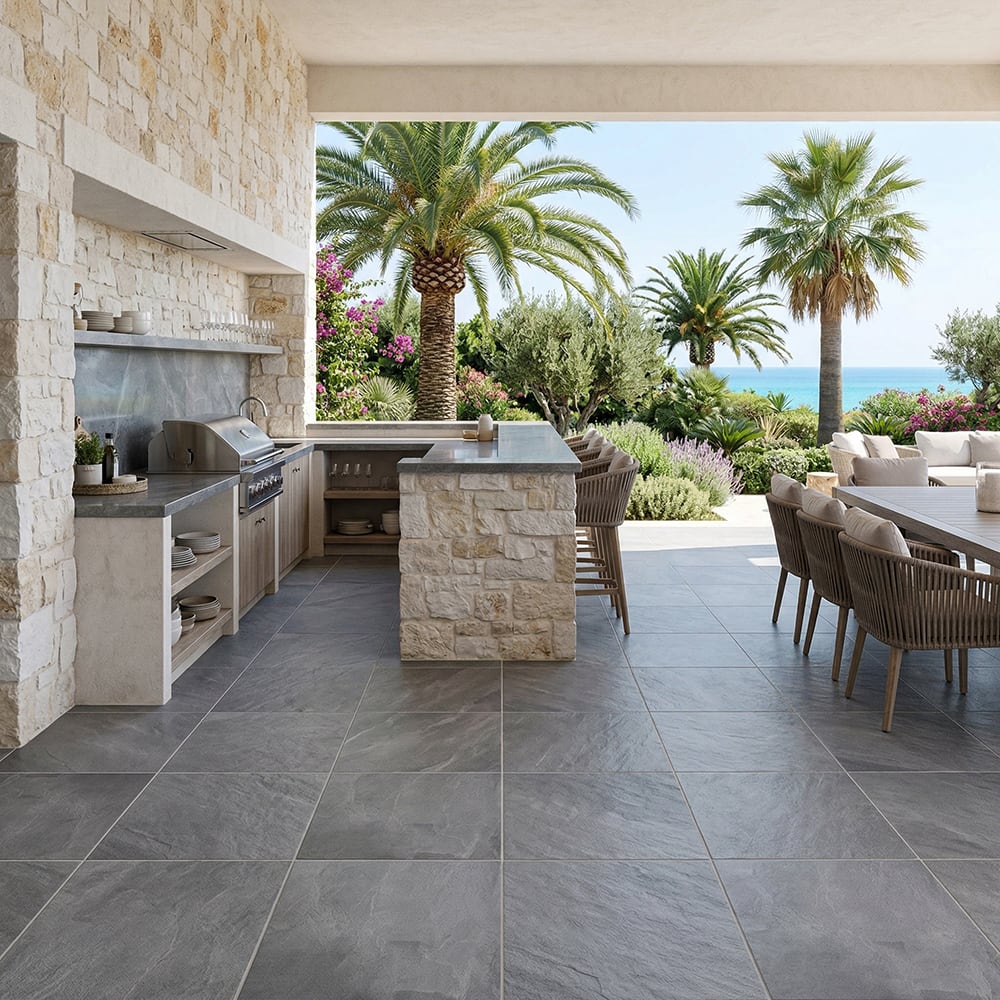
What We’re Looking For In Residential Outdoor Flooring? Grip, Grease, and the Frost Line
The single biggest mistake we see is people applying indoor logic to outdoor kitchen floors. Inside, you catch a spill in seconds. Outside, a burger falls off the grill, sits in the sun for twenty minutes, and that grease is working its way into the stone before you even notice. High density outdoor kitchen flooring that resists absorption isn’t a luxury. It’s the difference between a floor that cleans up with a hose and one that permanently smells like last summer’s cookout.
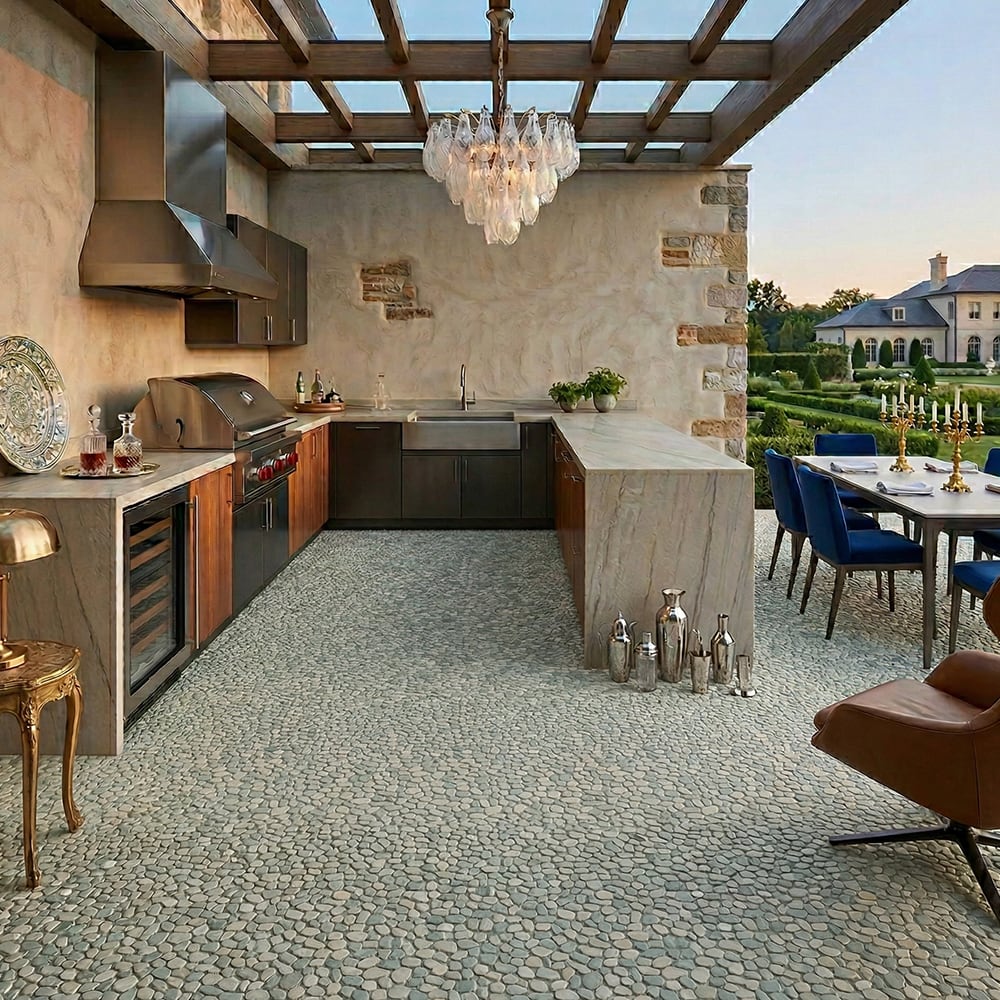
From my hands on experience with our homeowners: When you’re spec’ing kitchen non slip floor tiles outdoor, look for a DCOF rating of 0.42 or higher. A wet surface after a summer rainstorm should be the same slip risk as a dry one, and with the right rating, it is. Cold climate builds need one more layer of scrutiny. Frost resistant tiles for outdoor kitchens are non negotiable if you’re north of a freeze line. Low water absorption is what you’re after. A tile that drinks in the autumn rain, freezes solid in January, and spalls by March will probably be your problem, and we don’t want to change your tiles every two years.
The Materials We’ve Most Suggested and Used in Outdoor Kitchen Floors
We Suggest Porcelain Pavers For: The Easy Maintenance & Durability
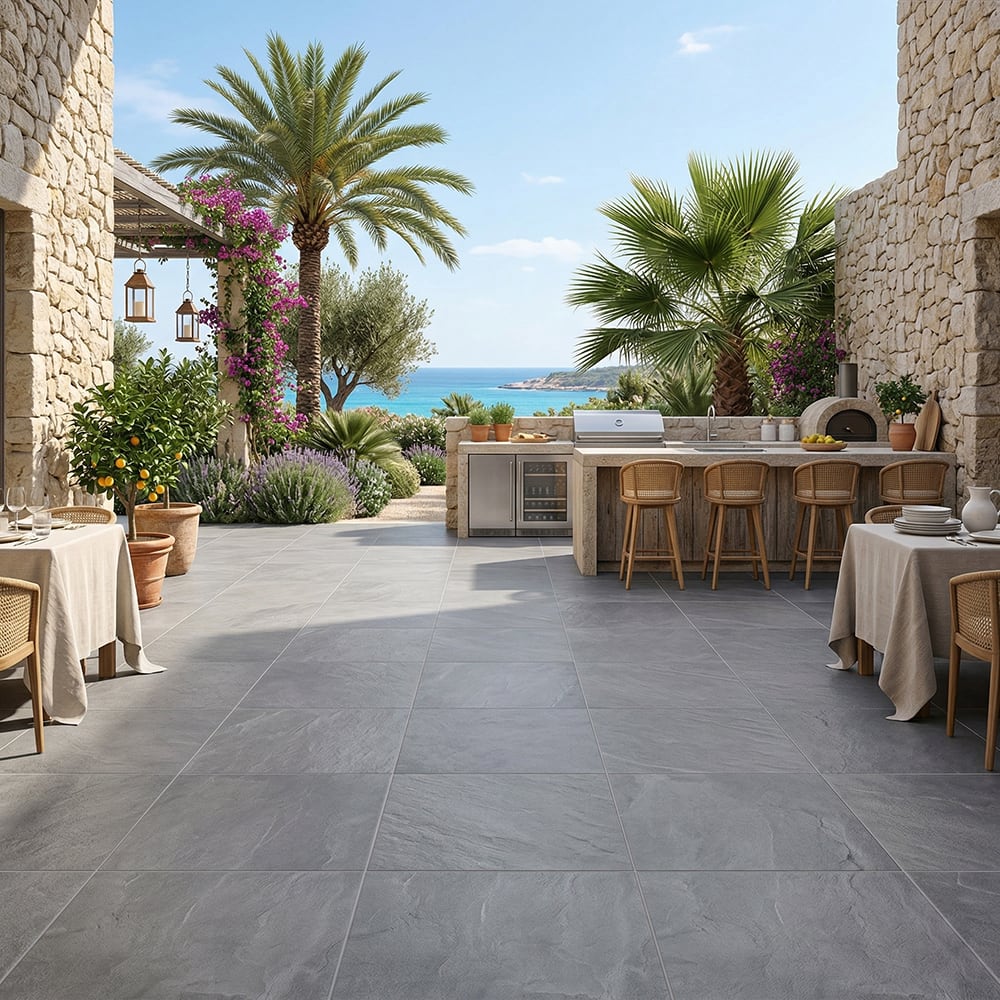
For most clients, porcelain pavers are the answer before they even finish asking the question. The 2cm (¾”) thick format is what we mostly use in our tile projects for cooking zones; thick enough to dry-lay on gravel, which cuts your labor cost significantly compared to thin tiles bonded to a slab. As greasy outdoor floor tiles go, porcelain will always be the answer that you’ll hear from me: the surface is non porous, so oil and wine sit on top rather than soaking in. And the best part is, at Stone Tile Depot, we offer with an R11 anti slip rating, making it the most dependable slip resistant porcelain pavers for patios on the market. And for anyone building outdoor kitchen flooring for cold climates, porcelain handles thermal shock without flinching.
We Suggest Travertine Pavers For: The Best Option For Warmer Climates
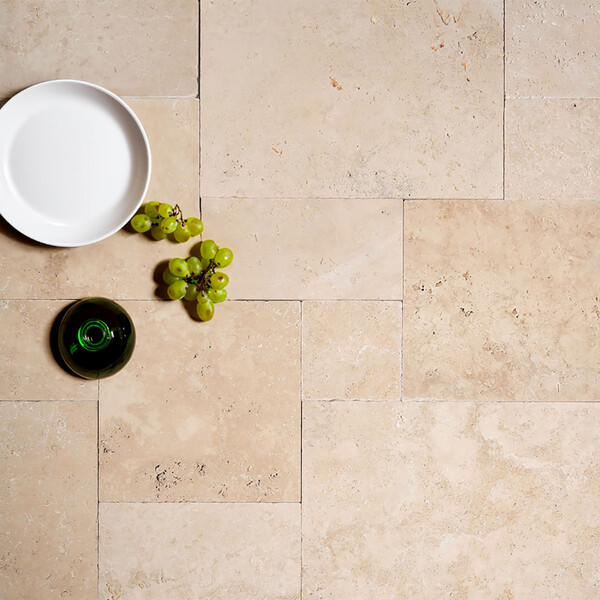
Travertine pavers have an advantage compared to most other outdoor tile materials: they stay remarkably cool underfoot on a hot day, yes, even on a July day. No, it’s not a mysterious trick; actually, it is the natural voids in the stone, which require an oleophobic (oil repellent) sealer, not just a standard water sealer. Skip that step, and your first cookout will leave permanent stains, a surprise you probably wouldn’t want. We’ve just done a new outdoor tile project with travertine, and our client didn’t use the appropriate sealer. And yes, it wasn’t a surprise for me, but for him, it pretty is. Done right, a French pattern tile layout in travertine is one of the most handsome outdoor kitchen floor ideas we install. That’s the layout you fell in love with in your saved Pinterest designs.
We Suggest Limestone Pavers For: Architectural Opportunity
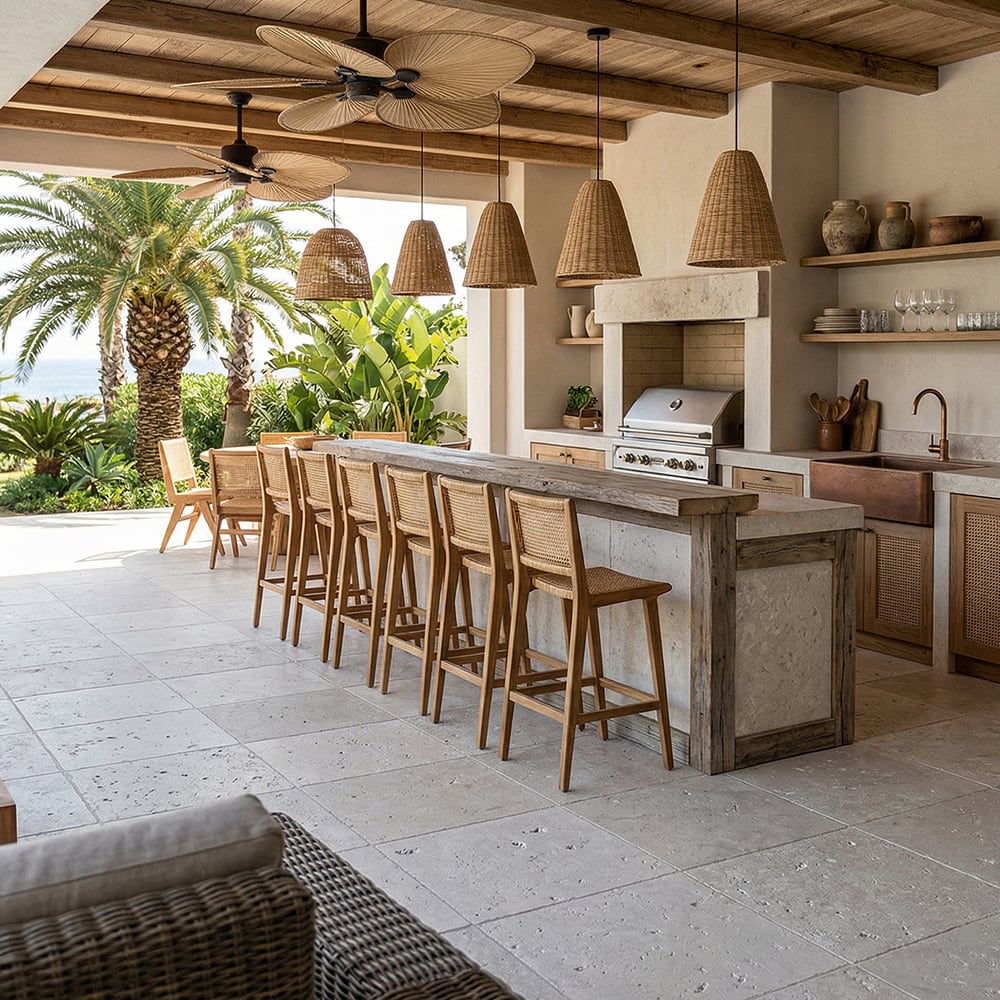
Limestone pavers are what we specify when a client wants clean, contemporary lines and is building something “Old Money”; think pizza ovens, full masonry surrounds, heavy countertops. Limestone has the density to handle that load without issue. We always finish it sandblasted or honed, which gives you the best non slip outdoor kitchen flooring without sacrificing the architectural look. UV stability is another underrated advantage: limestone’s neutral tones don’t fade under the sun the way some composites do.
We Suggest Outdoor Terracotta Tiles For: Authentic Outdoor Kitchen Designs
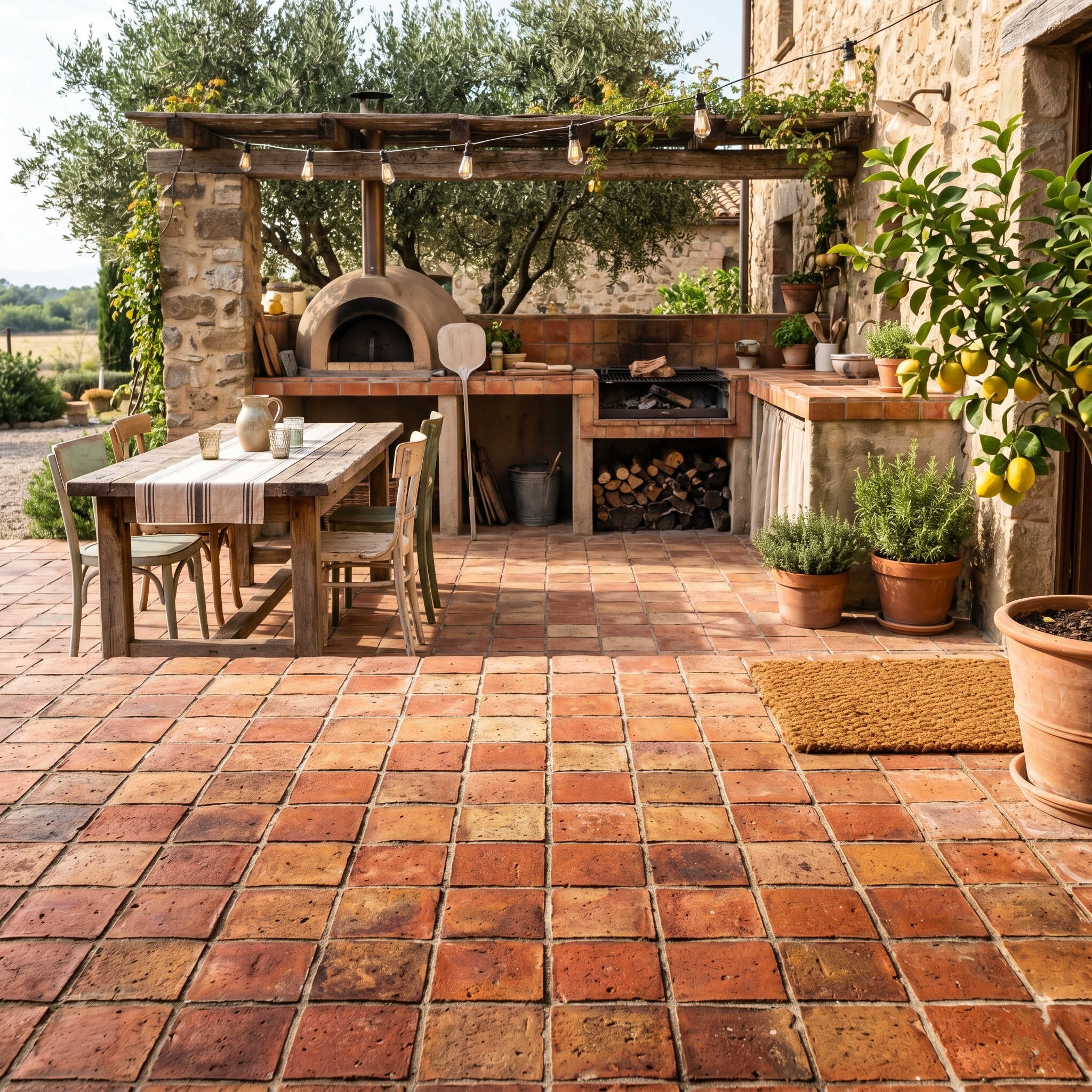
I’ve just read a terracotta sealing disaster on Reddit, and if you don’t care about the maintenance, you probably write a help as well. Terracotta done wrong is a maintenance nightmare. Terracotta tiles are one of the most beautiful tiles that I’ve ever seen in my life. For outdoor kitchen flooring, you need high-fired, frost-rated terracotta, not the indoor stuff. It’s the most porous material we carry, which means it needs a professional grade sealer applied properly before it ever sees a drop of cooking oil. It’s the only floor material we know of that gets better looking the more it’s used. After one more option, and we’re going to mention that, as well.
We Suggest Marble Pavers For: Residential & Low Traffic Households
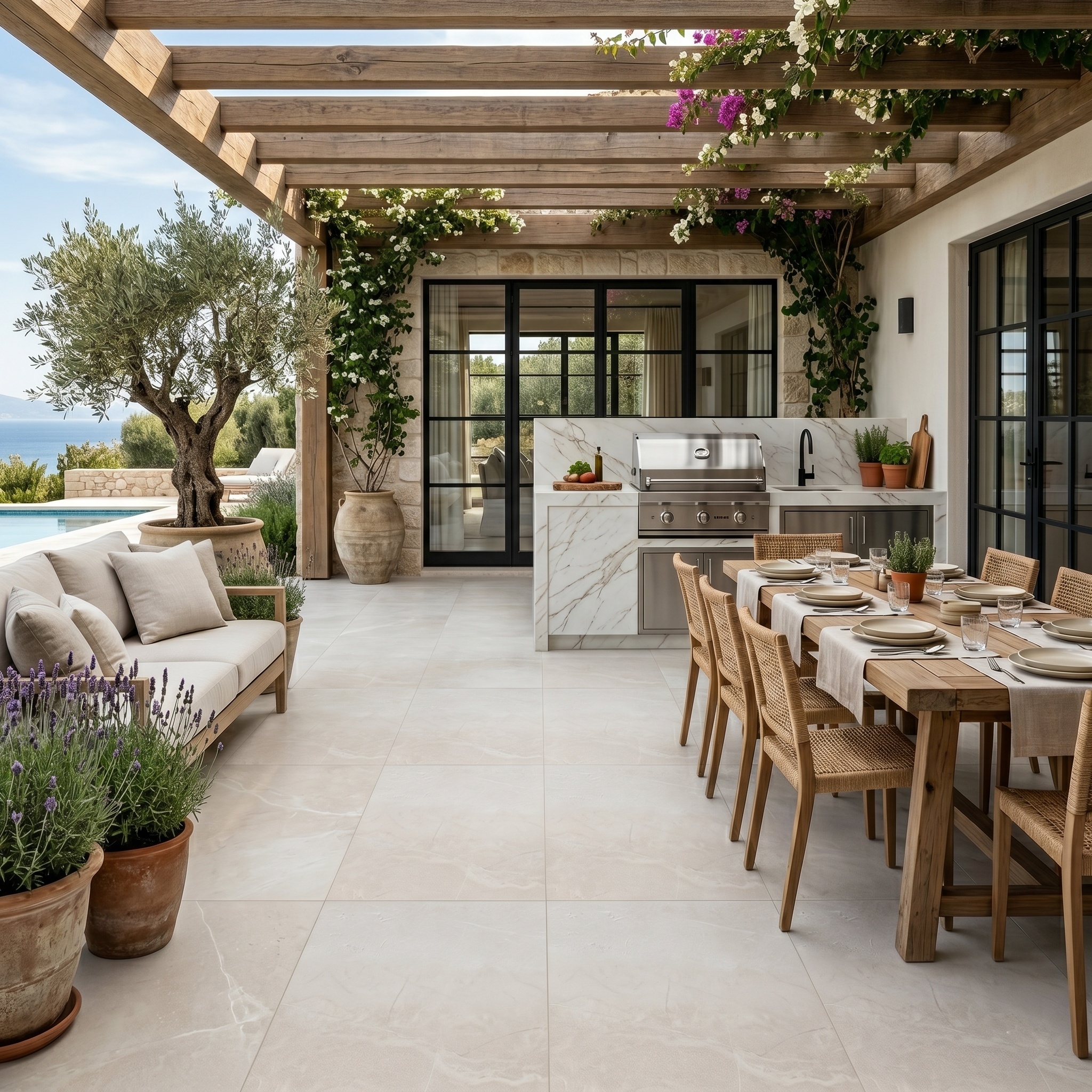
The rule with marble outdoors is simple: NEVER EVER polished. We only suggest tumbled or honed options in pavers for sale in marble, because those finishes give you the grip and weather resistance that polished marble never will. And if you have kids, pets, or the elderly in your home, that’s a MUST you need to look for. The thermal properties are real; a marble paver stays significantly cooler than concrete or dark granite in direct sun. For a south facing BBQ station, that’s not a minor detail.
The Most Asked Question: Natural Stone vs Porcelain Tiles
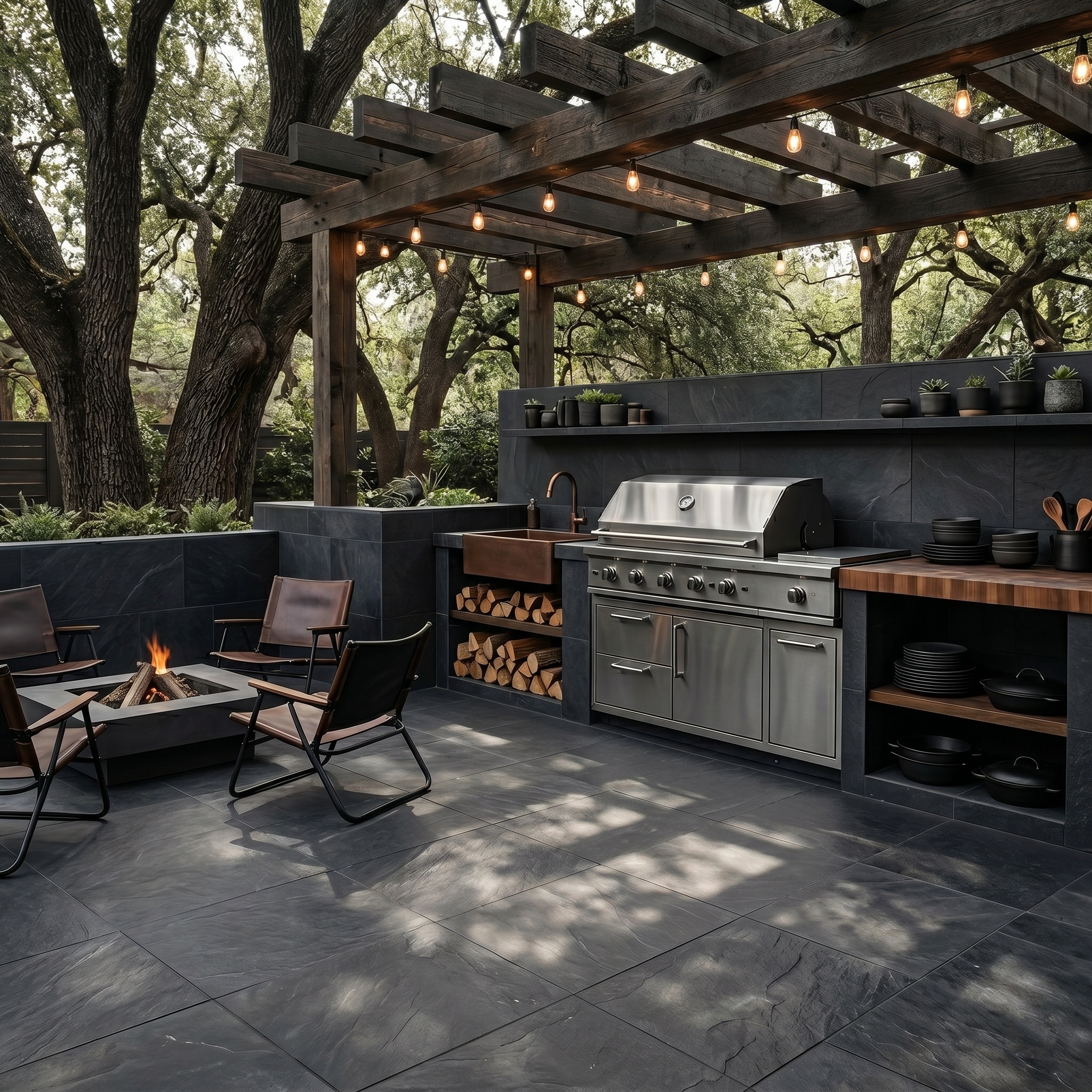
The natural stone vs porcelain tiles question usually comes down to one thing: how much maintenance are you actually willing to do? Natural stone is a living material. It needs periodic sealing to stay as easy to clean outdoor tiles as the day it was installed. Porcelain needs nothing; no sealing, no real upkeep beyond a rinse. If that sealing discipline sounds like a hassle, go porcelain. But if you need more details and info, visit our Natural Stone vs Porcelain Tile blog page and see the most important details and differences.
It’s Springtime, Let’s Decide on Your Outdoor Kitchen Flooring Together
Everywhere is blooming, it’s springtime, and BBQ season has come! Check our clearance tiles for premium materials at accessible price points, and build an outdoor kitchen flooring design that you have always dreamed of. Order a sample to compare the materials, or if you have more questions, grab your coffee and let’s chat in your tile showrooms!