

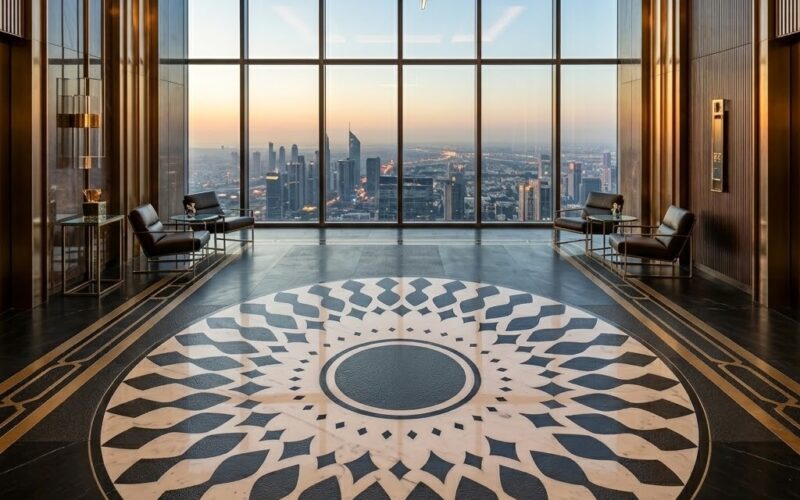
How Do You Know If You Should Choose Round or Square Floor Medallions?
Table of Contents
It sounds like it should be a simple decision. But with a few years of experience in the tile industry, I can easily tell that actually it’s not. Round or square, pick one, move on. But walk into enough grand foyers and hotel lobbies with us, and you start noticing something: the rooms where the marble medallion feels like they’re always there, like it could not have been anything else, almost always get this choice right. But how do you know if you should choose round or square floor medallions? Let’s wrap a few details around it and learn more!
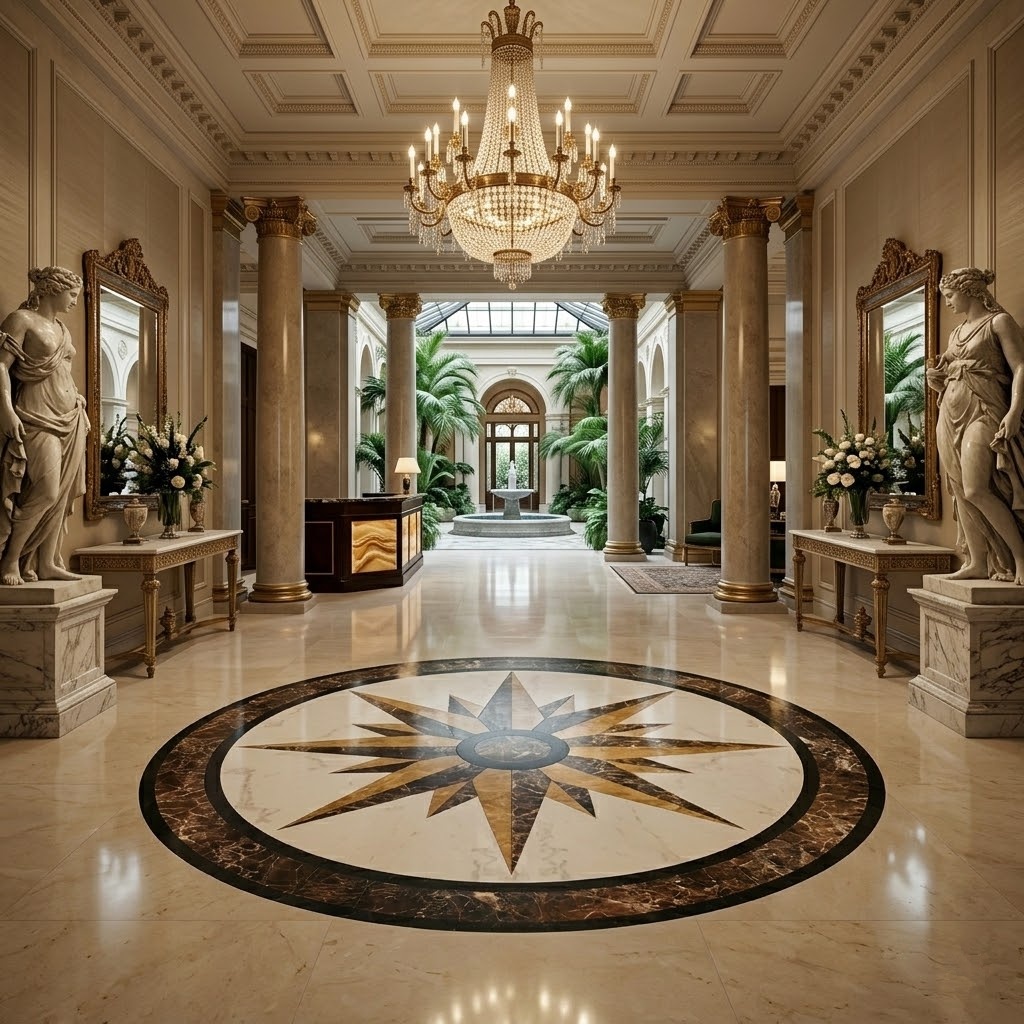
The Shape Is an Architectural Conversation, Not a Personal Preference
The single biggest mistake we see in medallion selection is treating the shape as a style choice when it is actually a spatial one. Round floor medallions and square floor medallions are not interchangeable options in the same space. They respond to the architecture around them, and the architecture either supports the shape or works against it.
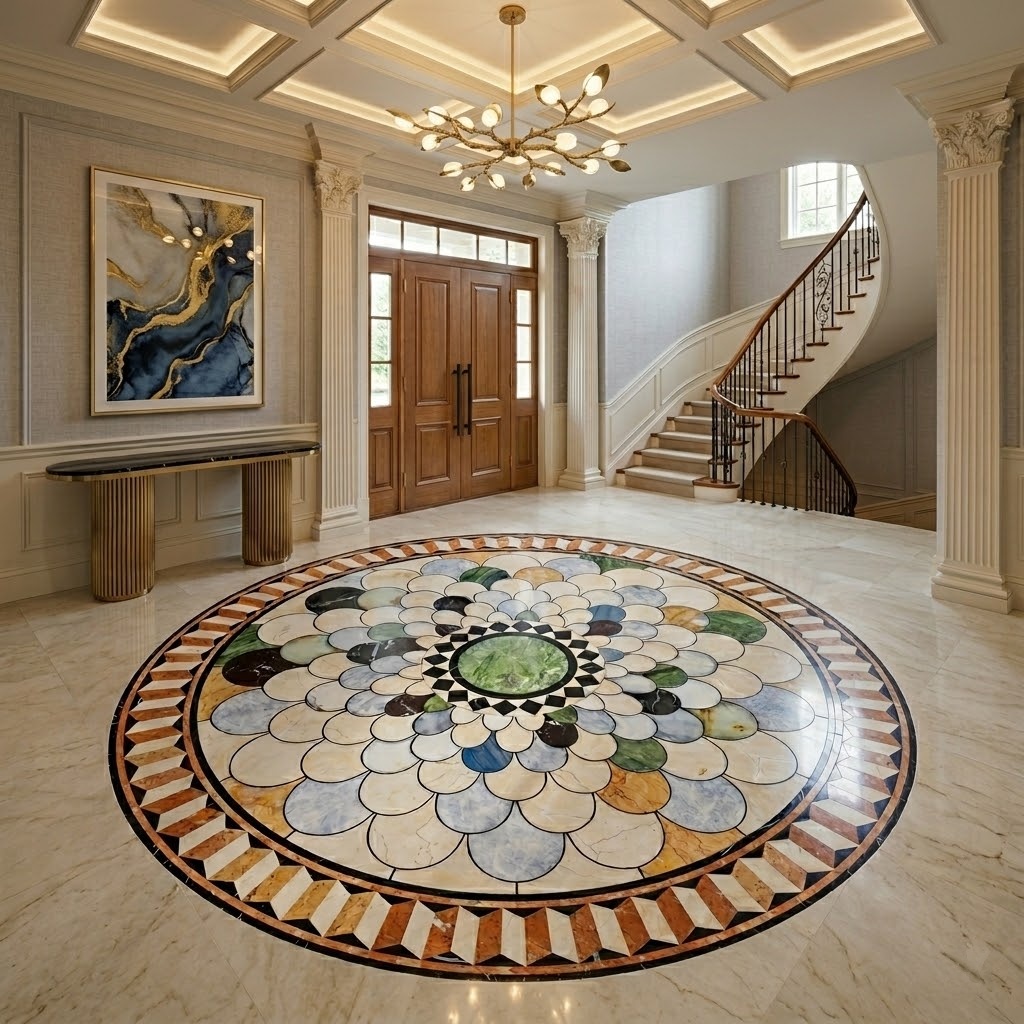
A round medallion draws the eye inward and creates a natural focal point that radiates outward from the center. This works beautifully when the room has a central axis, a domed ceiling, a curved staircase, or any geometry that already pulls toward a single point. Circular entry halls, oval foyers, and rooms with a rotunda above them are natural spaces for a round floor medallion. When you close your eyes and imagine a circular architecture, you can easily see that square and round shapes will crash, and that’s not a solution we’d like to bring to your project. Harmony and a flowy look are everything for these kinds of projects, especially if it’s a commercial one.
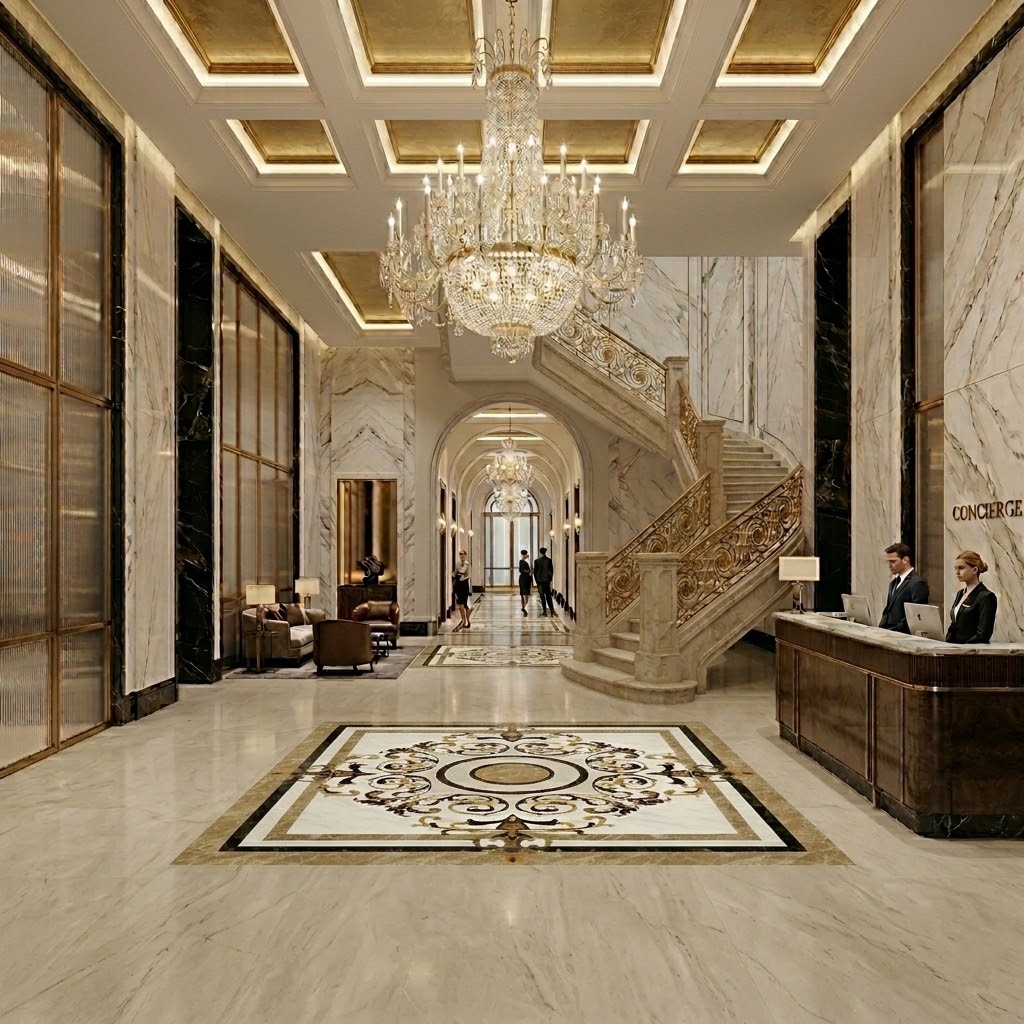
Square tile floor medallions are another case, and that’s the exact spot where our clients feel confused most of the time. They reinforce geometry, they align with grids, and they sit naturally in rooms where the lines are straight and the proportions are formal. A traditional rectangular foyer with crown molding, a hotel lobby with a coffered ceiling, a corridor leading into a formal dining room: these spaces provide the perfect conditions for a square medallion, and they reward the decision.
What We Actually Observe in Luxury Residential Projects
In the luxury home entryway medallion projects we work on, round entryway floor medallions are the more common starting request. Clients tend to come in with a round shape in mind, often because that is what they have seen in reference images, especially the perfect scenario AI renders. And in a lot of cases, round actually fits really well with the projects, particularly in double height foyers and open entry halls where the ceiling and the floor need to combine.
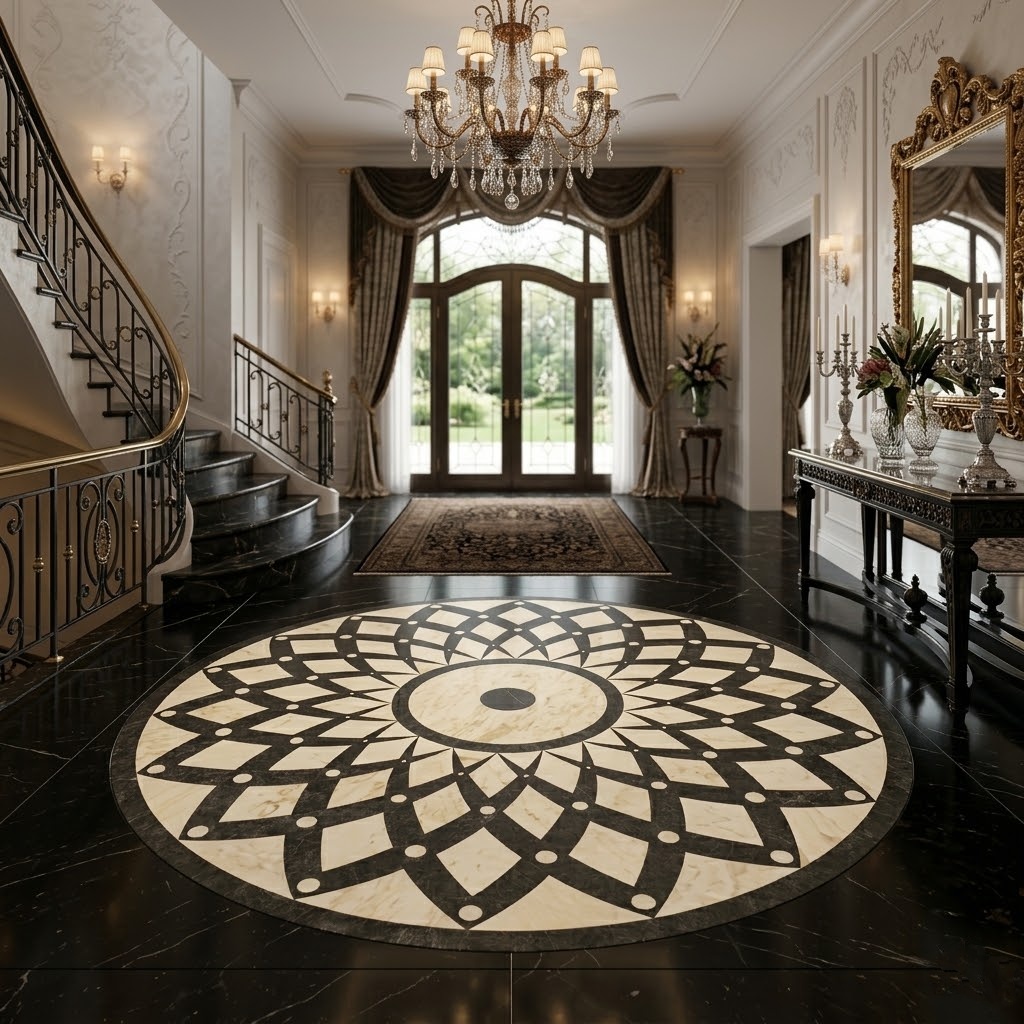
So, what are the situations we’re trying to fix? Think about it, when a client brings us a floor plan with a rectangular entry corridor leading into a larger reception room, I’m mostly suggesting a square floor medallion or a marble inlay medallion with a defined geometric border. The reason is simple: a round medallion in a hard rectangular space creates an aesthetic and geometrical tension, even if the homeowner can’t find why something feels slightly wrong. A square medallion is the only answer to provide the golden ratio geometry in those cases, and it disappears into the floor in the best possible way.
Commercial Spaces and Hospitality Projects: Where the Rules Take Shape in Brand Reputation
Hotel lobby floor medallions and commercial tile applications have different kinds of priorities than residential interior design projects, and the shape decision reflects that. In a hospitality interior design context, the medallion is a good representation of the brand reputation. It is the first thing a guest sees, and aesthetics always decide before the service.
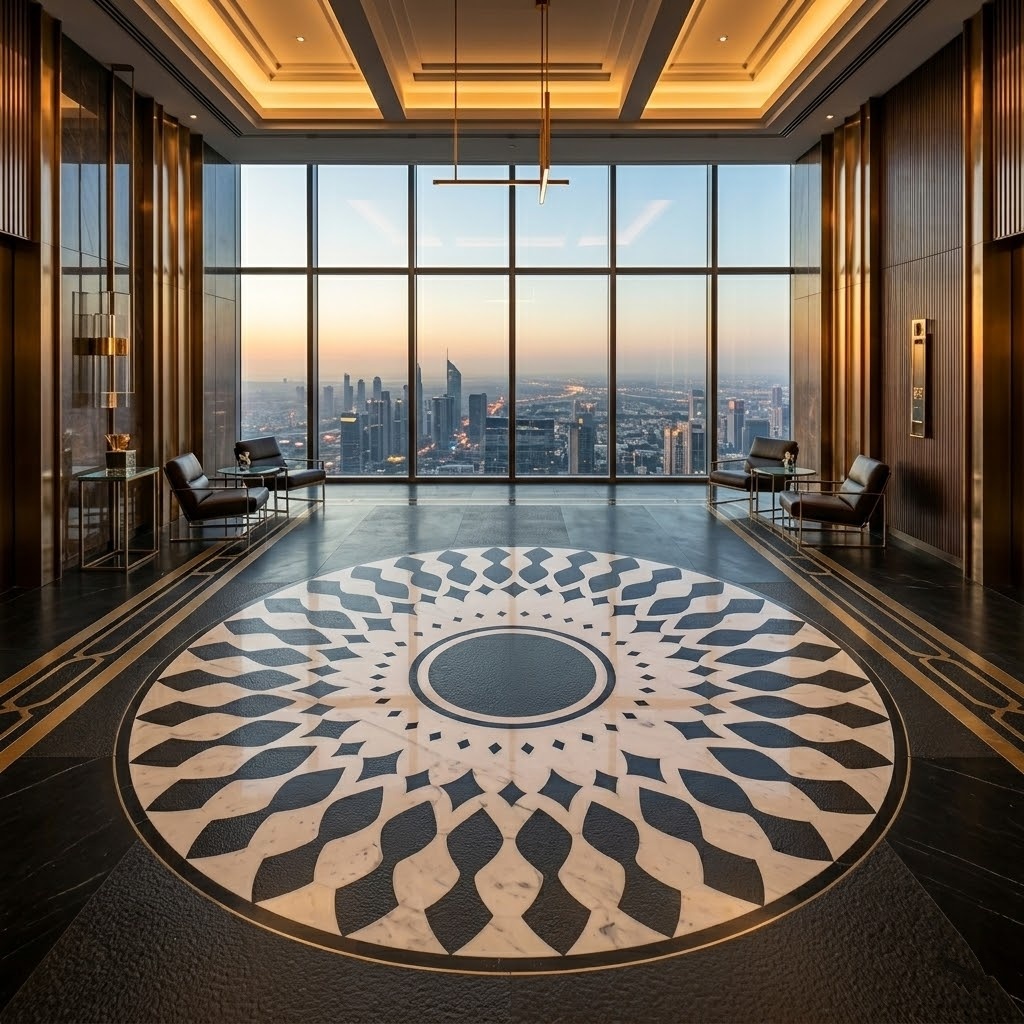
For boutique hotels with an organic, customized aesthetic, round waterjet marble medallions are the most chosen options among our clients in the latest projects. For grand hotel lobbies, ballrooms, and formal reception halls, square tile floor medallions or rectangular formats with strong geometric patterning feel like these places have a natural authority and order.
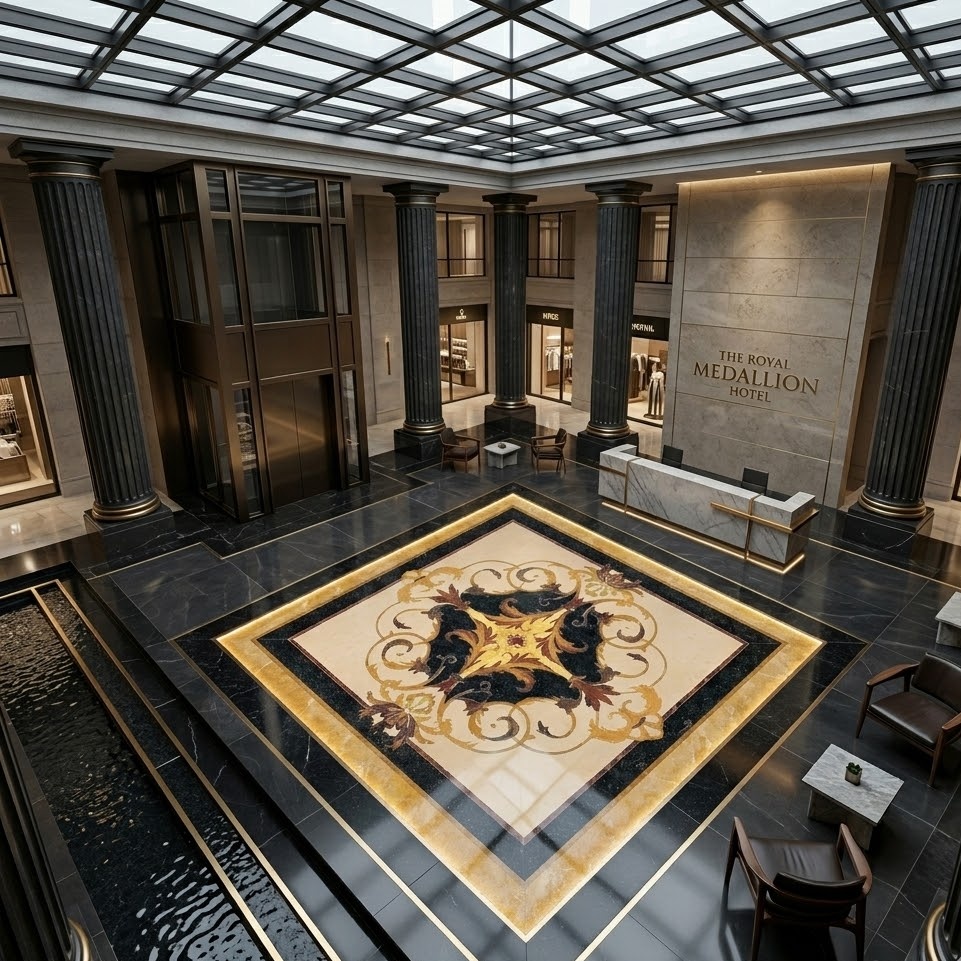
In restaurant and bar environments specifically, we have noticed that foyer floor medallions in a square format with a bold marble inlay tend to age better visually, especially with the other marble tile surroundings around it.
Another Point You Can’t Miss: Size Is the Other Half of the Equation
Shape and size are not separate decisions, you can’t miss one of them and expect a perfect outcome. A 36 inch round medallion looks very differently from a 36 inch square floor medallion in the same space, because the square format occupies the corners of its footprint in a way the circle does not. A square medallion at any given diameter feels larger and more commanding than a round medallion at the same measurement.
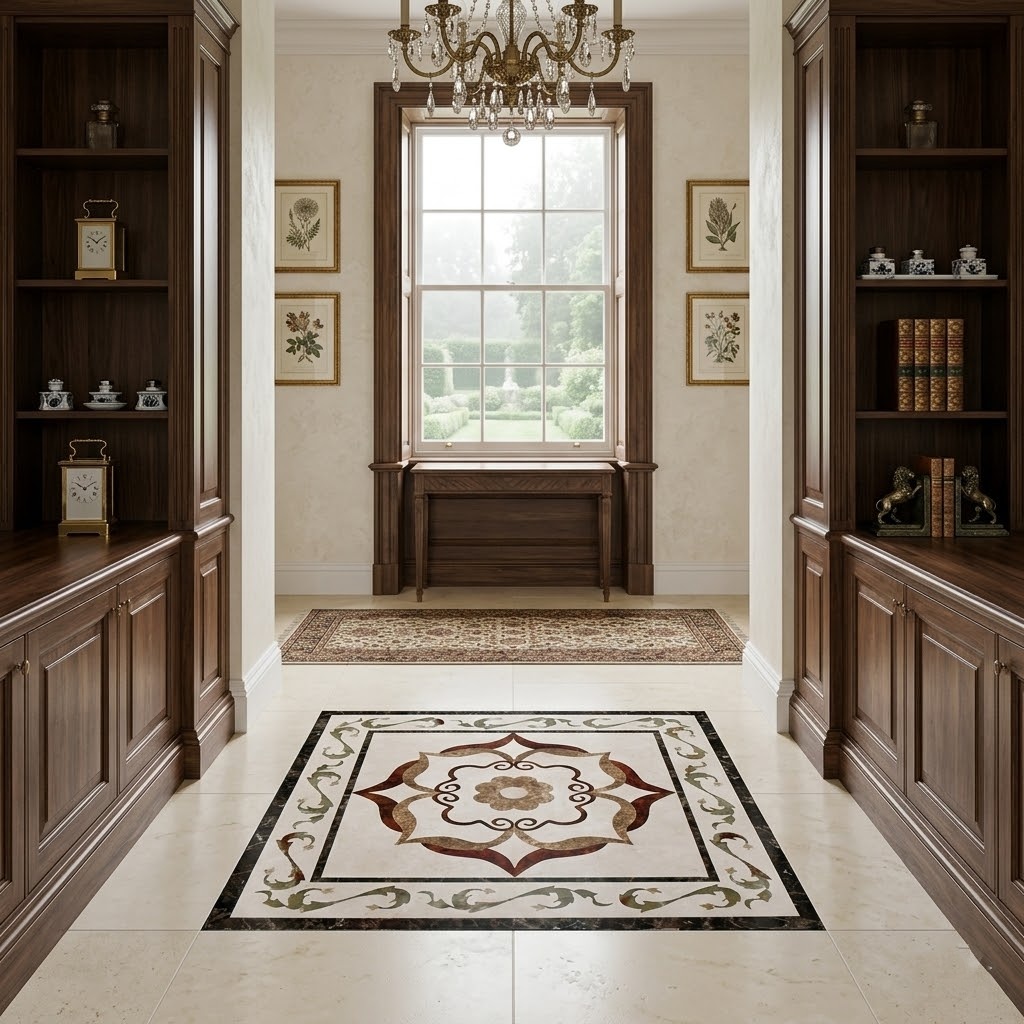
This matters mostly in entryway floor medallion planning. If the space is tight and a 48 inch round medallion is the largest size that works proportionally, a 36 inch square medallion might probably achieve the same visual effect. We tape out both shapes on the actual floor before finalizing recommendations on any project, and more than once, that tape test has changed the direction entirely.
So, Round or Square Floor Medallions?
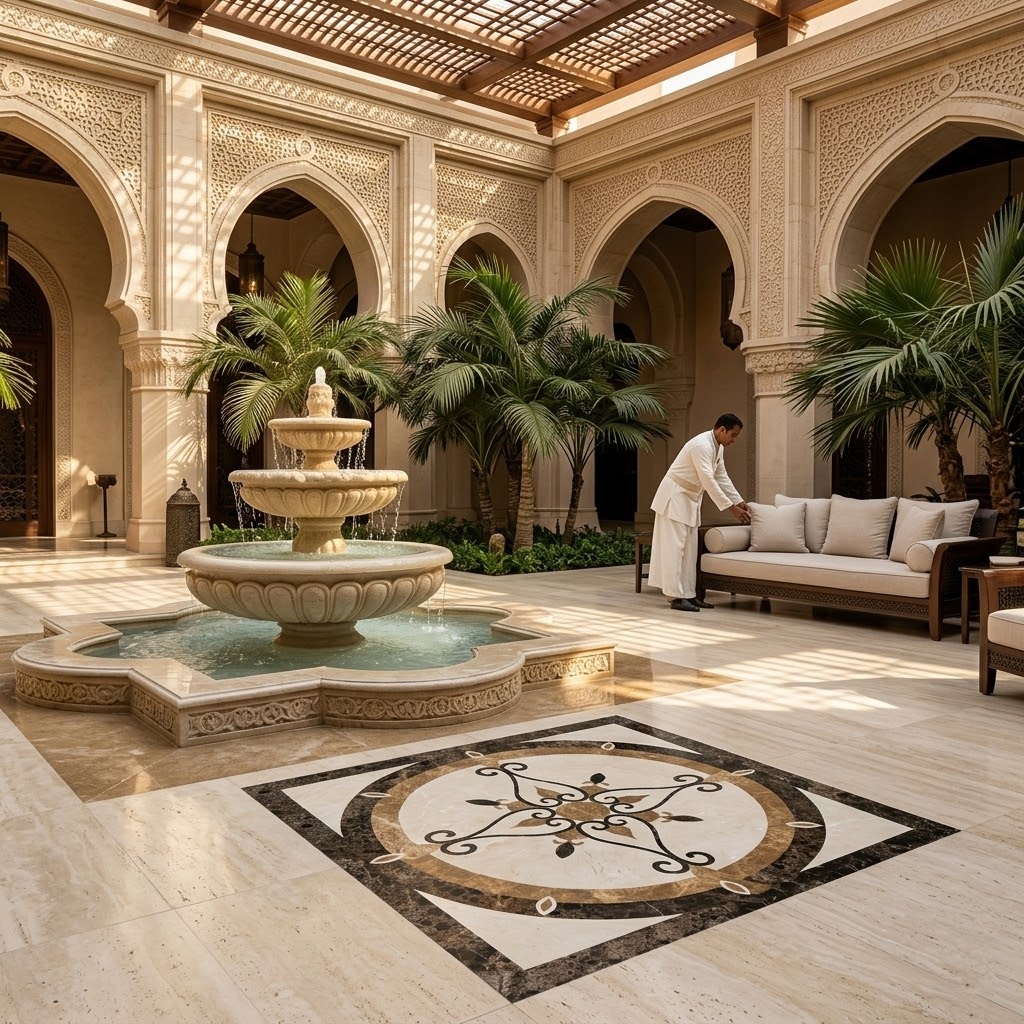
Round if the room curves, radiates, or already has a central pull. Square if the room is rectilinear, formal, or if you want the medallion to anchor rather than float. And if you are still not sure (and it’s totally fine because you’re not renovating spaces with medallions every day), that is exactly what our medallion tile showrooms are here for. We have shipped decorative floor medallions to luxury homes, hotel lobbies, and commercial showrooms across the country, and the shape conversation is always worth having before the order goes in.